Sunday, June 29, 2025

Final Fantasy VII REBIRTH thoughts - full spoilers

Warning: the post contains full spoilers for FF7, FF7 REMAKE, and FF7 REBIRTH. I couldn't take my own screenshots because I played on PS5, so hope you're OK with walls of text!

I was never particularly attached to Final Fantasy VII. The game was not localized in Italian, so in my home country you could only play the English version of it, and as a teenager my English was by no means good enough for such a task. I eventually caught up and played it in my early 30s, a few years after the PS4 port got announced, and found it to be a good game, but not a transcendental one; but I assume it was a matter of time and place.

What I did love though was the REMAKE that came out in 2020. It looked gorgeous, played great (especially after that garbage pile that was FF15; but that's a hot take for another day), had a good blend of linear sections, small open areas with a handful of quests and things to do, and minigames you enjoyed engaging with. The four characters you got to control (Cloud, Barrett, Tifa, and Aerith) all played differently, with various strengths and weaknesses, the summon restrictions meant you couldn't spam them and had to engage with the active combat, dodging and parrying your way through foes. The pacing in some sections was maybe a little off (I'm thinking about the trip to Jessie's house), and it had a bit of a bad habit of turning a throwaway line of dialogue from the original into an hour-long segment, but by the end you cared about Jessie, Biggs, and Wedge more than you ever did in the original game, and the actual ending blew your mind about the possibilities of where the game could go.

The INTERGRADE PS5 version came out a year later, and I liked it too. The Fort Condor minigame was very much a highlight, it was nice to get a deeper look at Yuffie's backstory, and Yuffie's Ninjutsu was well-integrated into the combat, giving you more tactical options despite mostly having only one character in your party.

So when FF7 REBIRTH came out last year, I was curious where the story would go, especially regarding THAT moment (still holding out on spoilers, last warning), and eagerly preordered it and started playing day one. Sadly, I was about to get a very strong reality check about why bigger is rarely better...

First of all, let me describe my experience with the game: I bought it on launch, played it for a month or so, at which point I was only halfway through or so (after costa del sol but before Barrett's village whose name escapes me) when I got bored by the issues I describe below and dropped it. About a month ago I picked it up again and played it intensely for a week, making it halfway through to chapter 9, when I had to fly out to visit family. After I came back I spent a few more days on it, and finally cleared it last night. Before we get to what irked me about the game, I do want to mention some of its positives: it looks gorgeous, the combat is generally fun, the queen's blood minigame is addictive, and the piano minigame is inspired in its control scheme. I also had generally a good time in the 80-90 hours I played, despite my misgivings below; so I am by no means saying REBIRTH is a bad game, it's just a bloated one that falls short of the expectations that REMAKE put upon it.

My main beef with this game is that it does not respect your time on any level, whether open world, narrative, or gameplay. The open world might look gorgeous, but it feels empty and filled with boring activities. Every time you get to an interest point, it's typically either a fight with a special enemy comp or a collectible that is necessary to unlock some other activity (sigh). In between the interest points, there's a lot of boring combat that only lasts 10-15 seconds, where you spam your basic attacks and some of your specials with Cloud and wipe the enemies; exploring it feels like a chore, necessary to maintain your character level above the suggested minimum for the main quest. The biomes are diverse to look at, but some (I'm looking at you Gongaga) are extremely frustrating to navigate because the map is not up to the task, and the Chocobo abilities you get are a mixed bag of fun and annoying to use.

When it comes to gameplay, despite the basic combat loop being solid, it is stuffed to the absolute brim with minigames and ad-hoc control schemes that slow down your momentum to a crawl. Following a giant worm in the Cosmo Canyon sands? Here, take this detector that forces you to walk telling you when you're hot or cold on the path. Exploring a dungeon? Have this unique mechanic required to open your path we will never use again for the rest of the game (throwing boxes with Cait Sith, grappling with Yuffie, taming the lifeforce with Aerith). Do you like a minigame? Here, have all the minigames you can wish for and more, and with multiple difficulty levels, so we will make sure even the ones you enjoy turn into a grind by the end of the game.

Now, I get that some of the above are due to how my lizard brain likes to play games, clearing the map methodically and systematically. So when I see a minigame I don't like that I feel forced to beat for completeness' sake, it puts me in a bad mood; but the game has a serious issue where it worries so much that you'll get bored walking from A to B that it thinks it needs to throw at you three different unique navigation tricks/control schemes/different interactions to keep your attention. This lengthens the time you play for no good reason and no satisfying payoff, and feels a bit like trying to rub your stomach and pat your head.

Finally, let's get to my beef with the narrative, which is twofold. The first one is that the main story pacing is absolutely terrible, and Nomura needed a good editor for his script, because he's taken 30-second exchanges in the original game and expanded them to hour-long dramatized scenes where all the stakes are up all the time. There is a point towards the end when you go to the Gold Saucer to get the Keystone to access the Temple of the Ancient. Dio tells you he'll give it to you if you beat Don Corneo's lackeys to help him retain the ownership of the Gold Saucer; easy enough, point me to those idiots and I'll take care of it. Then the game proceed to force you on a date with one of your companions, in which you have to watch a dramatic performance (an in-game film) involving Jessie before she joined Avalanche, and then play a QTE minigame in which you further re-live the story of the film with some of your companions. I DID NOT NEED OR WANT ANY OF THAT! First of all, not giving you choice on your date companion means Nomura has never played a harem RPG game (like Persona 5 or Trails of Cold Steel), because he would otherwise know everyone has a very different opinion about who best girl/boy is; it just felt like an hour-long chore that I was forced to sit through to get to the part I cared about, which is advancing the story.

The other issue I have is with the direction of the story overall. REMAKE offered an interesting variation to the story of FF7 by introducing the notion of whispers trying to keep fate on its course, and our characters' fight against predetermined outcomes. So the question naturally becomes, will Sephirot kill Aerith in this timeline as well? This is a conundrum, because if she does, then what was the point of the whole "defying fate" in REMAKE, and if she doesn't the whole game feels like bad fanfic whose purpose was to prevent Aerith from dying; neither outcome is likely to generate positive feelings in the player unless the writer is good enough to deliver the outcome in a satisfying way. It's the eternal issue of setup and payoff; taking a page from Dr. Who, some writers are good at writing setups (Russel T Davies), but it takes a special one (Stephen Moffat) to give you a good payoff and make you feel like you didn't invest in the story for a wet fart of a resolution.

Does Testuya Nomura have the writing chops for it? Well, considering the author's Magnum Opus is the Kingdom Hearts series, the odds of it working out were stacked against the player, and I'm sorry (but not surprised) to say the ending is an absolute mess. Not knowing which way to take Aerith's fate, Nomura implied that this Sephirot (same as the old Sephirot? different one?) is trying to ¿unite all the multiverses and burn them all at once with Meteor? Maybe? And Aerith ¿was still killed but brought back to life as an entity in the lifestream? Possibly? And now ¿Sephirot controls the dark whispers and Aerith the white ones? I think? It's never a good sign when you finish a game and google "ending explained" to understand WTF just happened.

What makes this very hard to explain/parse is that Cloud's mental state is worsening and connection to Sephirot/Jenova is strengthening towards the end. What was made clear is that only Cloud sees Aerith alive after the confrontation, that Cloud is in possession of the Dark Materia (or its key? again, not real clear WTF is up with that), and only he can see a giant gash in the sky, representing the confluence of the timelines (...probably?). Don't ask me to explain what is happening with Zack either, and whether by the end he is alive or dead; I don't anybody could give a sensible explanation (but if you know of such a person/video, please link it below). I assume some answers will be coming in FF7: REUNION (place your bets now that this is the title, it's a Nic guarantee), but after this game I don't know if I'll be there day one to witness it for myself. Fool me once, shame on you, fool me twice...

Tuesday, June 24, 2025

Chrono Review #1 - Akalabeth: World of Doom

The facts

The opening screen of Akalabeth on Apple ][

Akalabeth is a game of dichotomies. There are two platforms to play it on, the original Apple ][ or the DOS port from 1998. There are two “classes” you can play as, a warrior or a wizard. And there are two ways to play the game, either the long and patient way, or the speedrun way. As a result, you can have a wonderful time playing a little throwaway game that tickles your lizard brain receptors, or deal with a frustrating slog of identical hallways, invisible traps, and an exponential difficulty curve. Regardless, the most surprising thing is that this 45-year old game, built as a fun project by a teenager named Richard Garriott, is still able to get its hooks in you after all this time.

The story

Let’s take a step back and discuss the Origin of the game. Richard Garriott was a Texas teenager who was deeply entrenched in the nerd hobbies of the time: Advanced Dungeons&Dragons and computer programming. I will not relate the whole biography of the future Lord British up to this point; instead, I suggest you check out this wonderful video by Majulaar. In his senior year of high school (or freshman year of college, the chronology is muddy) Garriott programmed a small game using the BASIC language on his Apple ][, the ubiquitous (though expense) personal computer platform of the time. This was a time before the internet, when homebrew games were not readily available, and computer games in general were few and hard to come by. Garriott was working at a computer store during the summer, and decided one day to fire the latest version of his pet project on one of the store's computers. His boss was walking by, and being very impressed with what he saw he suggested the store should sell copies of the game Garriott had titled Akalabeth (a fortuitous mispelling of a term from Tolkien's Silmarillion).

Little is left nowadays of the original release, and I couldn't find a playable version of it anywhere; but the Museum of Computer Adventure Games History has a page dedicated to the release, and you can see a pdf of the original art and manual the game came with. The game was by no means a smash hit, due to the very limited distribution network of ONE store; but one of the few copies it sold made its way to the California Pacific Computer Company, a computer software and game publisher based in Davis, CA. How the game made its way from Texas to California I do not know, but Garriott had included his address and phone number at the end of the original release, and a phone call and a handshake later, CPCC agreed to publish the game in a wider distribution, and the story of Lord British was off to the races.

For this review, I’ve both played through the GOG version, and set up an Apple ][ emulator to play the CPCC-published original version (though I strongly recommend setting the render speed to max to avoid wasting time during screen refresh). The Apple ][ version lets you earn retroachievements, while the GOG version is easier to set up and a little snappier, but has some unexpected behavior.

First clicks

The introduction to the game itself is barebones, and only the manual gives you some backstory, though it is essentially just flavor text to color your adventure. The version of the game I found on the internet archive did not contain instructions, but had some charming rudimentary graphics (potentially hiding some loading behind the scenes). 

The first illustration shown after starting the game
The second image, showcasing a dungeon entrance
Gotta be honest, you won't see anything THIS exciting while playing

The game starts by asking you a “lucky number”, representing a seed for the randomization of the game, and a "level of play", representing the difficulty of the game. Then you roll random starting values for all your attributes: hit points, strength (tied to damage), wisdom (tied to hit chance), stamina (tied to defense), wisdom (determining your starting quest), and money. You can reroll these until you get stats to your liking, and then get to pick whether to be a fighter or a mage, the latter only able to use a single weapon (the axe), the former not being able to control the result of the magic amulet. Finally, we get a shop menu, where we can buy food and weapons, before hitting the Q button to start the game. 

You are now dropped in the world without any idea of what to do, unless you have read the manual. This was the early age of home computers, where (to my understanding and research; I was not born yet) Arcade games and ports dominated the videogame market; while instruction manuals existed, the games were simple enough that you could pick up and play them without many issues. Part of the reason E.T. for Atari 2600 is considered such a bad game (it’s not) is that it is utterly inscrutable without the manual, something that was still very unusual in 1983, three years after our game got published. 

Reading the manual carefully we learn how to parse the overworld map, and recognize mountains, dungeons, and towns; and most importantly learn that we need to look for the castle: “To win the game it is necessary to visit the castle. From this point one may embark on a quest by which the game is won”. So we do just that, and start moving about the 20x20 map looking for the castle; I hope you bought enough food to start, because each step in the overworld will consume one whole ration, and if you’re out it’s an automatic game over. I’m not sure if the fault lies in AD&D 1st edition’s food rules, or Garriott’s liking of survival aspects in his real life D&D campaigns; but the need to buy a ton of food because you consume it while moving is an annoyance that will last a few more Ultima games before becoming somewhat manageable.

Not enough food? Sorry, you'll starve to death.

Let’s assume you survive long enough to find the castle. You’ll be greeted by this screen:

Oh, NOW I deserve a name since I'm in the presence of the mighty LORD *smh*

You finally get to name your character and get assigned a quest, to kill a certain kind of monster, depending on your wisdom stat. 

Seems easy enough: kill one skeleton and become a knight, 20 minutes in and out.

Lord British kindly increases your attributes by 1, and sets you on your merry way. Funnily enough, you can refuse Lord British's call for adventure, in which case he tells you to BEGONE! Nothing bad happens, and you can talk to him again, but the main quest chain goes through him, so there really isn't any point in saying no. 

The game loop

You enter the first dungeon you see, and the game truly begins. Inside the dungeon, you switch to a first-person perspective, with wireframe drawings of walls, chests, ladders, and enemies. The dungeons all have a randomly generated layout, though the “lucky number” you picked at the beginning determines the parameters that generate the dungeons, so picking the same lucky number and dungeon again guarantees the same layout. You move around the area, looking for the enemy Lord British tasked you to kill, going through doors and secret walls, and up and down ladders. Food is consumed for every action, though thankfully only 0.1 units of food are spent with every movement/attack, I should spend a few words on one of the most irritating feature of the game: a lot of walls you see are actually fake, and can be walked through, but there is nothing denoting such walls in-game, and because of the low refresh rate of the Apple ][ (and the lack of sound cues) it can be very hard to tell if you've gone through an invisible wall or are just pushing against a cul-de-sac.  

The first-person view inside a dungeon

Enemy encounters are pretty simple: you see the enemies attack you, and you can attack with a weapon from your inventory, or with your bare hands. If you're a fighter, you mainly want to use your rapier, and a bow and arrow if the enemy is away from you; as a mage, you have a choice between the axe and the kill spell on the magic amulet (which doesn't actually kill, so it should be called the "damage" spell instead...). If you manage to kill the monster, you earn some gold and, secretly, some extra HP are added to an invisible bonus pool, that you can claim when leaving the dungeon. If you run out of HP or food, you start over from scratch, as the game (at least until the 1998 port) has no save feature. There is a pleasant variety in the design of monsters, but all of them behave essentially the same: they approach you and keep attacking you until they die, or (if some conditions are satisfied) escape from you in a straight line to regen hp, in which case you wish to pursue them and trap them in front of a dead end to butcher them. 

Two notable exceptions to this (and both of them can bugger off for this) are the thief and the gremlin. The thief has a chance of stealing one of your items at random, including the one you're using to attack (there's not equipment screen in the game); if it’s one unit of food it’s not a big deal, but these jerks appear in early levels, and few things are more frustrating than having them steal your only axe, forcing you to hit with your bare hands. 

Thieves are so annoying, especially early on when your inventory is scarce...

One such thing though are the flaming gremlins, who have a chance to steal 50% of your food. Food stops being an annoyance after a couple of trips, except if you stumble upon one of these nuisances and cannot manage to kill it quickly. Facing one of them most likely will entail another trip to the surface to spend all your money on the food they stole.

... but gremlins are so flippin worse. [Screenshot taken from a source code repo, since I can't seem to encounter a single one of these jerks when I need it...]

After we kill our skeleton, we go back to Lord British to get our well-deserved knighthood. Except a lordly title is not so easily gained, and we are then tasked to kill a thief, and then a rat, and so on and so forth, each enemy being more dangerous and located deeper within a dungeon than the previous one.

He's altered the deal, pray he does not alter it further (he will)

The loop from that point on is pretty straightforward: enter dungeon, explore it to try and kill a specific monster without running out of food, climb out to restock and get an updated quest from Lord British, repeat until the last monster (the trademarked Balrog, re-christened "Balron" in the DOS re-release) has been defeated. Once you report the slaying of the Balrog the game doesn’t end, but there isn’t anything else for you to achieve besides personal objectives, like challenging yourself to go as deep as you can. 

My progress so far...

At this time I’ve beaten the game once in the DOS version (by using the speedrun/cheeky method) and I’m trying to beat it once the long way with the fighter. I’ve picked a fixed seed and a dungeon near the castle, and have been working hard to map the first few floors, so despite dying multiple times I keep a bit of knowledge with each run, and get to go a little deeper. I have now to find and kill a gremlin, and by my count (and the retroachievements list) there should be three more monsters after that.

So the game seems pretty straightforward, and it sounds like only bad luck can prevent you from a successful run, right? Unfortunately not; the issue (and the reason the game is very frustrating without using the cheeky trick) is that the quests are not repeatable and are limited, so your stats are hard capped at +10 from their starting values. And that’s only if you start with the lowest wisdom, so you get the quest to kill a skeleton first! Most characters start with higher wisdom and deeper in the quest chain, so they are more likely limited to half a dozen or so level ups. This is not quite enough to comfortably get to the lower levels with any starting character, so you really need to be patient until you roll a character with high stats but low wisdom if you wish to beat the game “the honest way”. 

I will put in a few more attempts at that (and at getting all the retroachievements) before posting the final verdict. We also still need to talk about the cheesy way to win the game. Hope you’re ready to shed your humanity for some lizard skin...

Wednesday, June 18, 2025

The Master Project gets revealed! Introducing Chrono Reviews on GWN

The backstory

It is now time to reveal one of the main uses I plan to make of this blog, which is not unlike the CRPG Addict and the Adventurer’s Guild. If you’ve followed me for some time on Youtube, you’ll know I have gotten deeper and deeper in the mine of old video games, partly as a reaction to games these days being expensive and so extremely long. After 20 or so hours the pleasure of playing a new game more or less evaporates, and I rarely if ever get back to a game I dropped. Game Pass and PlayStation Plus Extra also help this Netflix-like mentality, where you can just download a recent release, play it for a handful of hours, and feel like you got your money’s worth out of the service even if you never beat the game. 

Inevitably, the curiosity to play all games in X genre and/or for Y console arises. Besides the two blogs mentioned above, I also want to shout out Jeremy Parish’s YouTube channel, the work Jeff Gerstmann is doing ranking all NES games, and the Portable Power Podcast YouTube channel for cataloguing and reviewing Game Boy games. 

So where do I (and this blog) fit into it? I was made aware recently of the existence of the CRPG addict via the DOS Game Club podcast (another shout out), and it brought to my attention that blogging in 2025 was still a viable avenue to communicate your thoughts to a dedicated audience. My first thought was naturally to go in the point-and-click adventure route, but a deeper dive on CRPG addict’s blog revealed the link to the Adventurer’s Guild, another blog who is years deep into that precise project. At the same time, I was not relishing the idea of spending hours and hours playing text adventures/RPGs, and I am a fan of consoles too, and would have to skip on some games that were released for those platforms but not PC (Final Fantasy or Portopia Murder Case, to name a couple). So I decided to take up a similar project, but make it mine in various ways; after some workshopping I decided to call it "Chrono Reviews".

The overview

My goal is to play through a bunch of games in (mostly) chronological orders (hence the feature's name), taken from the RPG, Strategy, Graphic Adventure, and FPS genres. I have grabbed the various lists from Wikipedia, and compiled and cleaned them up in a sheets file linked below. Note that I am not interested in playing EVERY SINGLE GAME in those categories, but rather want to experience the main ones and the B-level ones, and if there are a bunch of obscure games that go by the wayside I'm ultimately ok with that, and will send you back to the CRPG addict for a more complete list, though limited to CRPGs.

The games I play need to be in a language I understand. That means essentially English; I am A-OK with fan translations, but I will not slog my way through a bunch of Japanese-only (or Russian-only) RPGs. Again, it's not about playing every single game, but using this as an excuse to play some old games and tickle some receptors in my brain.

As I make progress playing the games, I will write blog posts about my experience, and ultimately give it a score (it's a review after all!) in terms of the RELATIVE scale I developed (see below). This is meant to capture how well the game I looked at holds up under modern scrutiny, and among the other games in the genre. While I do not pretend for these ratings to be objective (there is no such thing after all), I do try to take myself out of it the best I can, and give a somewhat impartial judgment on the merits and flaws of the game.

The main differences from the projects above are the fact that I will widen my scope in terms of genre, including every kind or RPG, as well as FPS and Strategy games; the interest in discussing retroachievements for compatible games; and, most importantly, we will alternate looking at different eras (1980, 1988, 1992, 1997, 2002) according to the rules listed below. The purpose of the last choice is to ensure we're not stuck in the mid-80s for three years, and get to experience more interesting, more advanced games at the same time as old classics.

It's all RELATIVE

The goal of the project is, naturally, to review games, so let me introduce you to our rating scale, called the Rather Extensive List of Active Tests Integral to a Veracious Evaluation, or RELATIVE for short.

The RELATIVE score will be out of 100 (for convenience's sake), and be evenly split among 10 categories, listed below with descriptions explaining what each category measures/represents.

  1. The game setting
  • Game world has unique features that distinguish it from other games
  • Creators have endowed game world with history and lore
  • You understand how your character and quest fit within overall game world
  • You feel like you play a role in determining the world’s status
  1. The player’s Avatar
  • If character customization is an option, you get a chance to really make the character your own, and different choices lead to different feeling characters
  • There is a sense of progression and increased complexity as your character levels up/improves
  • If the character is pre-determined, it is consistently written and well-placed in the world.
  1. Interaction with the world and its characters
  • NPC dialogue, cutscenes, and/or object descriptions are well-realized and entertaining to explore.
  • Secret areas are hidden but not too hidden, and contain fun rewards
  • NPC Interaction makes your character/party members feel fully fleshed out.
  • You get attached to the NPCs as if they were your own friends.
  1. Quests and Story
  • Game has a "main quest" or series of missions/objectives the completion of which constitutes the narrative of the game
  • There should be few plot holes or false leads in the main narrative, unless they serve as (satisfying) plot twists
  • In an RPG, the Main quest has different outcomes based on player decisions. Multiple endings are not required but are a plus for other genres.
  • Game features side quests that offer opportunities for character building and flesh out the world.
  1. Combat and difficulty balance
  • If combat is present, player has numerous options in combat, all equally valid
  • Some thought is required to get out of situations, but the challenge doesn’t seem impossible to beat
  • Game does not require excessive quick load, pixel hunt, and trial-and-error to be beaten.
  • There are no dead-end situations that require reloading a save from hours before.
  • There are no broken builds that trivialize the combat, or puzzles that can only be figured out if you already know the solution
  • Negative modifiers: excessive grinding required; needed to consult walkthrough to get unstuck
  1. Inventory and interface
  • Commanding your units is easy to understand, makes sense on the platform’s input device, and has useful shortcuts you get used to
  • Upgrade paths (if present) are easy to determine and pick following your priorities
  • Item descriptions are clear and helpful as to what the items will be used for.
  • Information on screen is presented in a neat, easily accessible manner
  • Interface is pretty to look at/based in the universe
  1. Bartering and Economy
  • Gathering resources to trade for items or upgrades follows a clear process. 
  • Resources can be consistently obtained in a clear manner, and are clearly highlighted in the interface.
  • There is a good variety of items/upgrades you can exchange for resources, so you’re not stuck in a linear chain of choices.
  • The game is neither excessively generous, neither too stingy with the amount of resources available, so you feel like you have a shot but your resources matter until the very end
  • For Point-and-click adventures, this mostly revolves around item trading chains, which should not be excessively long or convoluted.
  1. Graphics and Sound
  • I generally care little about graphics as long as they’re functional, and I can easily read where I am and where I’m going and where to click/interact with things.
  • Character designs are unique and well-presented, and their animations and vfx are expressive.
  • Music and sound effects are pleasant and non-distracting, especially in long games.
  • NPC dialogue and barks, if spoken, are fun and well-acted
  1. Playing and Replaying
  • The game is easy to install and play on modern machines, without requiring crazy workarounds. 
  • The overall experience of playing the game is fun.
  • Game controls are responsive and appropriate to the genre and modern sensibilities
  • Game is highly replayable, offering different experiences for different classes/alignments/approaches, or is fun enough that replaying it in a few months is an exciting prospect despite it being linear.
  • Overall pacing is good; game is not over too quickly, neither does it drag
  1. The X factor
  • This category looks at the game heuristically and as part of its own genre. How does it innovate? What makes it special/unique? Does it have a lasting impact? Is it still fun to play today?
As I'm sure you can tell, the GIMLET ratings from the CRPG addict were a strong inspiration, but I made the categories my own to account for the various types of games we're gonna rate. It is my desire to be somewhat stringent with the scores. Not every game can be a winner in every single category, and not unlike the CRPG addict I'll strive to make a 40 a decent score, and a 70 an excellent one.

All plans must eventually meet the enemy on the battlefield, so I expect the rating scale and descriptions to get slightly updated as I actually start reviewing games of various kinds; but I'm hoping the bones are solid enough that this plan will stand the test of time (if not of my commitment).

The Games

Let's now talk about the games we will be playing for the next couple decades. You can find the list at this link. The first page lists the games currently on the docket, and the other sheets the list of games in each genre we're considering. These are ordered, where possible, by release date; whenever a release year was the only data posted on Wikipedia, a random seed was assigned to each entry, and they were sorted randomly according to that seed. I would love to find more exact release dates, but we're looking at thousands of games, and I was not about to google each of them individually.

As mentioned above, we will be looking in parallel at five time periods: we will start with 1980, which is the earliest year in the Adventure page (so we couldn't go any lower), and it also is the year that Akalabeth came out, so it seemed serendipitous; we might recover the older RPGs at some point, but it's not a priority at this time. 1992 was a must-pick year because of the releases of Dune II and Wolfenstein 3D, the commonly-listed daddys of RTS and FPS. 1988 seemed like a good year to get into the burgeoning JRPG market, and 1997 was a landmark year with Playstation and N64 having an excellent output. Finally, 2002 was picked for symmetry, and to get a look at the PS2, GBA, and Windows XP releases.

The data still needs a lot of clearing (and updating! the RPG list only goes to 2009), but it already took a lot of work, and I seriously doubt I will get to a point where I need the 2010s RPG before a decade passes. The lists are also, naturally, incomplete and potentially incorrect, and I welcome any suggestions or additions. The one that required the most work was the RPG list, with multiple dates according to region, ports, compilations, and limited editions being listed, and an overall difficulty to parse; I will do my best to fix issues and repeated games as we go through our journey.

The rules

Last but not least, let's go over the ground rules for the project:
  1. The most important rule and the one that supersedes all the others: I'm doing this because it's fun. I enjoy playing old games, I enjoy learning new things, and I enjoy coming up with weird rules and limitations to enhance the experience. If something stops being fun, I can invoke this rule to play a random game in my list (or out of it) for some comfort.
  2. I must give my best attempt to beat the games I'm playing with my own resources. If at some point I end up desperately stuck over multiple session, hints/walkthroughs are allowed, but should be used in a minimal fashion.
  3. If a game does not have a win condition, playing it for 6h satisfies the beat requirements (as with the CRPG addict, 6h seems like a reasonable amount of time to sink in a game before knowing what it's like). I can keep playing it if I wish or I think I need it to give a fair review, or score it and move on.
  4. Dockets only update when all games listed across all genres in a single timeline are beaten. And after beating a game, I must move to either a different category or the next time period (or both). This guarantees I will make somewhat even progress across all genres (and eras).
  5. I will never play a later game in a series without having cleared all previous entries (so no FF7 until I beat FF1-6, for example). If we encounter such a game in the docket because of our timey-wimey manipulations, we can push it to the stack and replace it with the oldest entry we still have to beat. We can pop a game off the stack anytime as long as we have a free slot on the appropriate docket; the previous rule reapplies if necessary.
  6. To avoid spreading too thin or trying something new the moment a game feels hard/unfair, at any time only 4 games can be considered in-progress, and if more than one game is in-progress, all need to be completed before I move on.
The rules can be amended at any time, though not without deep feedback or reflection. And rule #1 always wins out.

Wrap-up

With everything being set up, it's time to get the project started with our very first game. I thought that a little mirroring would be fun, so in our next post we will venture in the (small) world of Akalabeth: World of Doom... Expect a weekly update or so (though I can't guarantee how much progress will actually be made). In the meantime, keep an eye on this space for more updates, and check out youtube.com/@Retro-GamesWithNic, where new content will be dropping regularly starting 07/01. And, as usual, let's keep retro-playing together.
-Nic

Thursday, June 12, 2025

(k)E(igh)3 2025 wrap-up


Welcome to the first real post of the GWN Blog! 'Tis the season for all game announcements, so I decided to gather my thoughts about the last week of "press conferences" and game announcements and package up the things that I liked and that I'm looking forward to play in the next year or two, and the actors/groups that I believe had a down week (and, thus, a pretty grim few months ahead)

Exciting games coming up

I wanted to shout out below a handful of games that were shown that tickled my fancy. I've included a steam link and the screenshots from the steam page (or official website) for every game.

Bloodstained: the Scarlet Engagement


Only notable mention from the Sony State of Play (Marvel Tokon looks good, but I’m not a fighting game guy), I’m stoked at the idea of a Bloodstained sequel, mostly because the world could always use more good Metroidvania games. It’s gonna be a long time before we see more of it, but it can cook until it’s ready.

Mina the Hollower


I’ve had my eye on this one for quite a while. This is the next game from Yacht Club, the Hollow Knight developers, and is expected to merge Castlevania with Link’s awakening. It looks gorgeous and I can’t wait to get my hands on it this October. Check out the demo for yourselves!

Resident Evil Re9uiem

I’m a big fan of Resident Evil, and basically loved all of the Capcom output in the franchise since RE7. The fakeout halfway through Summer Gamefest was a masterpiece, and I can’t wait to return to a semi-destroyed Racoon City on 02/27/2026.


Super Meat Boy 3D

More curious than convinced, but I believe the Meat Boy formula deserves a proper 3D outing, and the action in the trailer made it seem like the game had a solid base  excited to see more in early 2026. Being on Xbox Gamepass (the PC version of which is a fantastic deal) day one makes it a no-brainer.

Clockwork Revolution

This one caught me by surprise. They had announced it two years ago, and being made by inXile (of Wasteland and Fallout lineage) I expected a cRPG in that vein. Instead, the team cooked a single-player FPS with choices and time-mechanics, and is presenting it as a Bioshock heir of sorts. I’m sure they’ll do a deeper dive when the game is closer to release (TBD at the moment), but if it stays on track I’m excited to check this one when it releases.

There are no Ghosts at the Grand

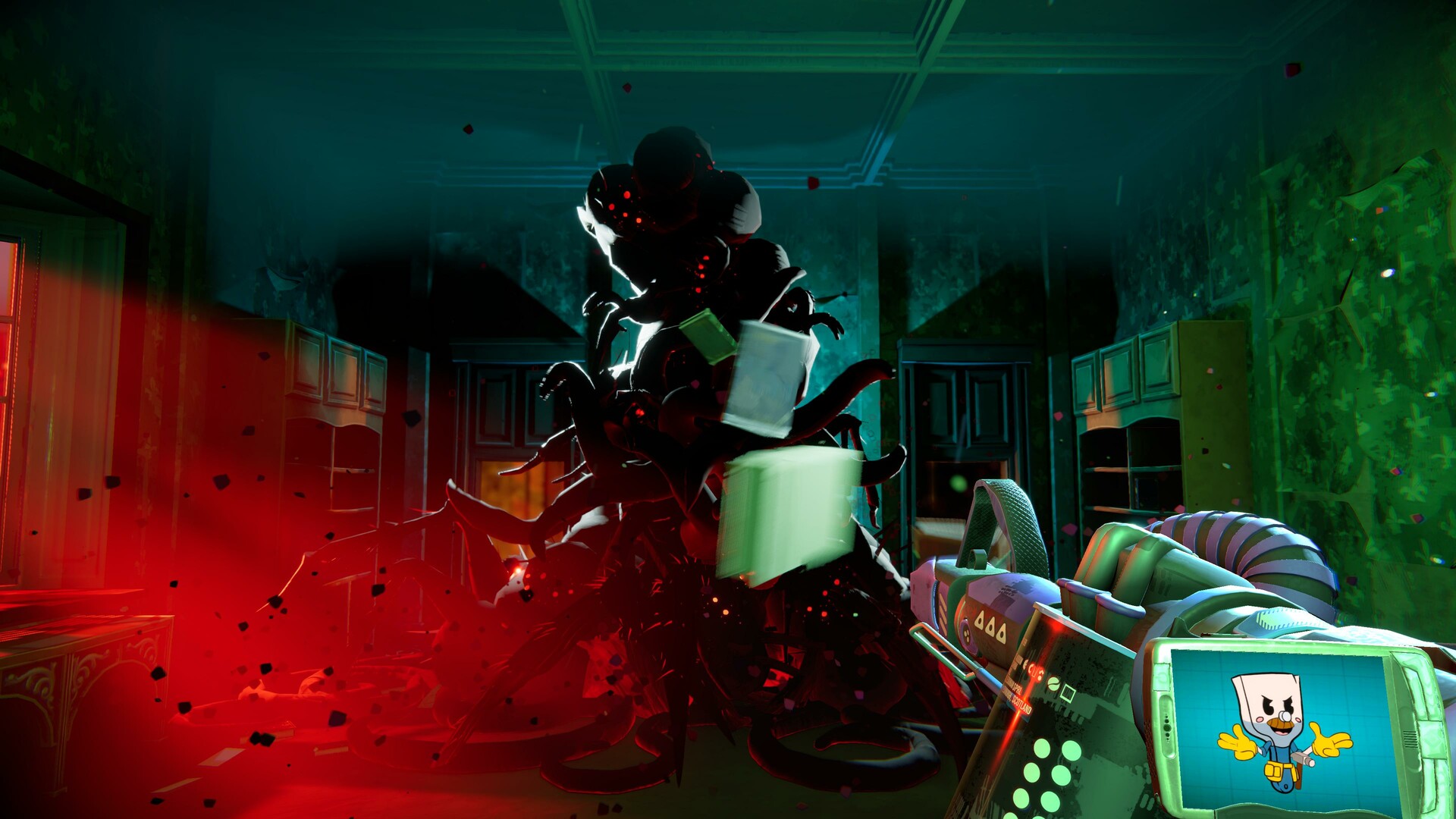
I was sold on this game when it seemed a cozy game aping Powerwash Simulator; then the trailer pulls a Blue Prince and seems to have a deeper secret plot to follow along. I get the feeling it’s probably thinner than you’d like (call it a premonition), but the release on Game Pass again means it’s a no-brainer install.

Ninja Gaiden Ragebound

I do not care for the 3D Ninja Gaiden series (though that’s a blind spot I should take care of at some point…), so Ninja Gaiden 4 did nothing for me, but Ragebound looks like a dope 2D action game, and made me want to immediately replay The Messenger (check out that indie gem if you missed it), which was really a spiritual successor to the NES Ninja Gaiden Games, with a metroidvania spin. Thank goodness they came out with a demo too! Check the demo out for yourselves, and get the game on 07/31 if you like what you see.

Xbox RoG Ally

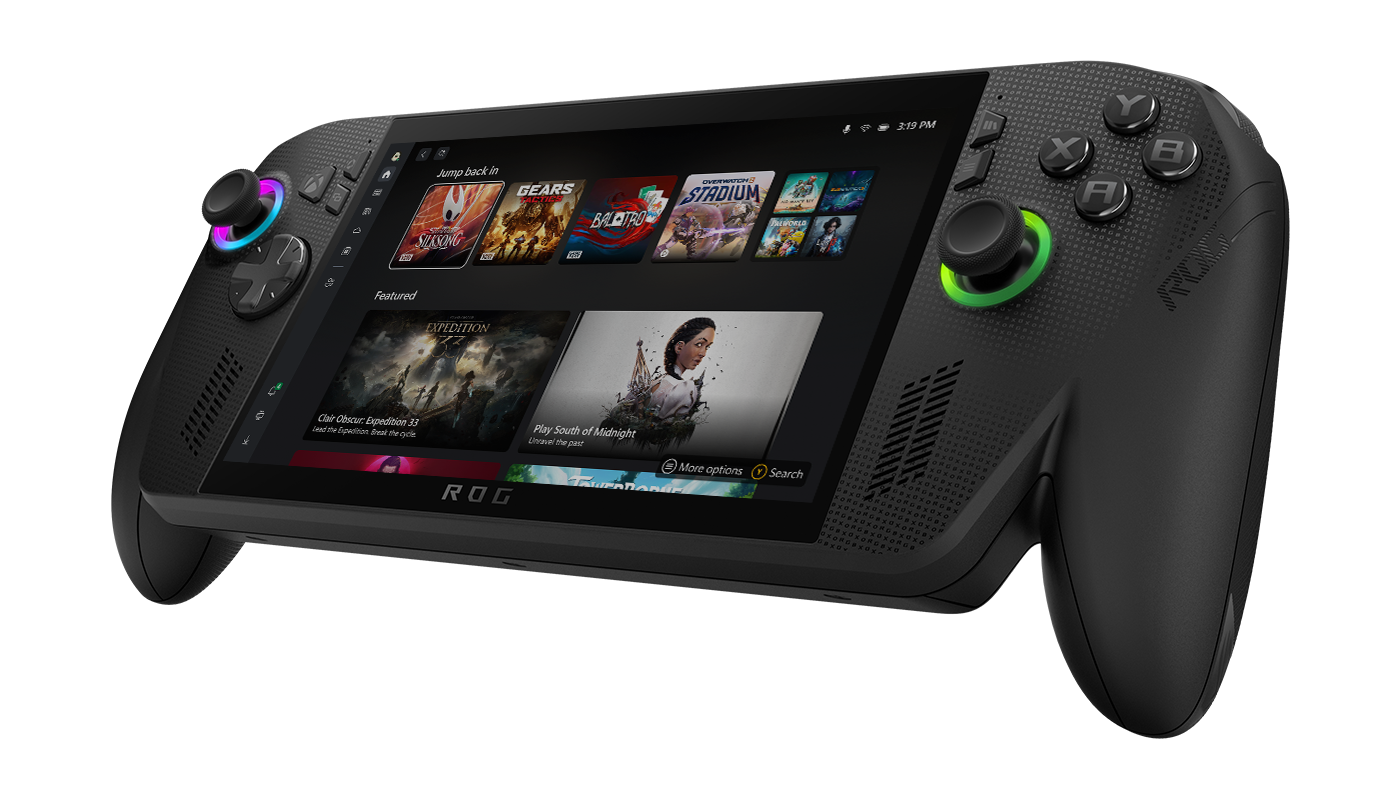
I love, love, LOVE my Steam Deck, but it’s starting to show its age, and to be mostly used as an emulation machine. Assuming the price of this product is reasonable and it runs Xbox Game Pass games well, it might be worth an upgrade. Mildly optimistic, with reservations.


Persona 4 Revival

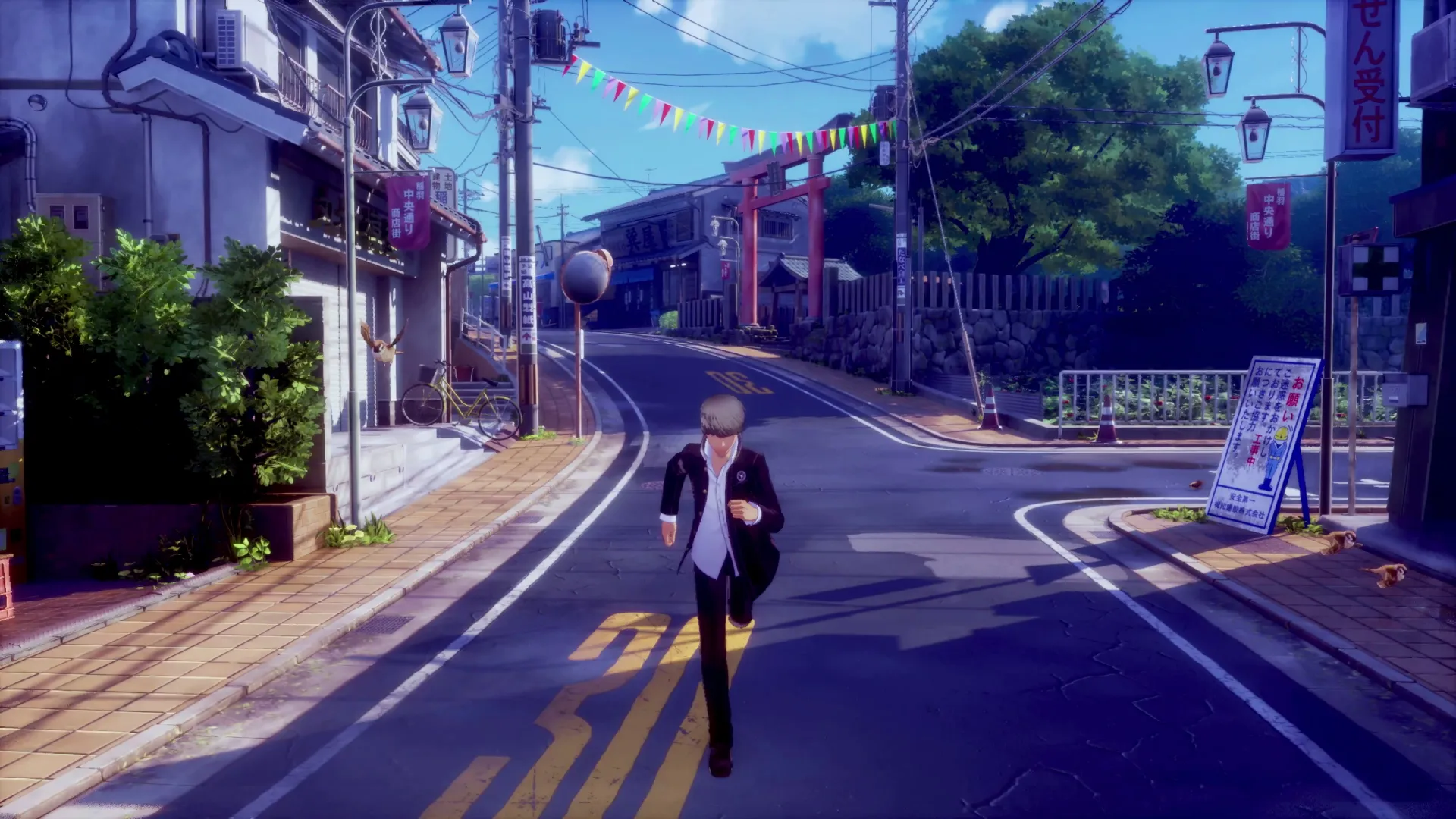
P4 Golden was a formative game for me, despite its shortcomings. We don’t know much about this remake as of yet, and it’ll be a long wait (rumors say it’s more than a year away) but the team would really have to fumble the ball for me to not get this one. Also, shout out to the Giant Bomb P4 endurance run.


Neverwinter Nights 2 Enhanced Edition

This might be a little silly, but I always heard that NWN2 was a fantastic game with some jagged edges (like a lot of Obsidian-developed games of the time), so an Enhanced Edition that fixes the issues and makes the game run smoothly on today’s PCs is very welcome. It releases on 07/15.

Skyrig


This one gave me Factorio vibes in an original setting, where height plays a role. Not much else to say at the time, but I expect it to be in early access for a while when it launches.

The losers

First of all, I want to say that I miss the old days of back-to-back press conferences, when you could pit Sony, Nintendo and Microsoft against each other to determine who "won E3", or relish at the insane guests that Ubisoft stunt-cast to try and sell you on the same game in three different flavors, or learn more about the Devolver insane lore. But maybe I’m just missing the time when we were not assaulted by a constant stream of new games with endless updates, and you could reasonably have a bird’s eye view of the whole industry, instead of mastering a specific niche. Or maybe I just yearn for how much simpler my own life was back in the day…

In that spirit, let’s rank the losers of (k)E(igh)3 2025! (according to me, naturally)

Geoff Keighley and Summer Game Fest

More like summer snooze/gacha fest. I admire his work for being able to arrange a pseudo-E3 (hence the name of this post), especially the days when gaming press can check out upcoming games; but the cost of it for the average consumer is a 2-hour long advertisement for multiplayer games with predatory practices or yet another squad-based games-as-a-service shooter, with maybe one or two interesting or surprising announcements. Unlike in the December Game Awards, too many publishers have their own events in this time, so Geoff gets whatever scraps he can and has to fill the time fluffing up bad stuff. Not worth the watch if you've missed it, and north worth missing a social occasion for.

Silksong

Either announced a release date for it already, or don't showcase it in these presentations. We've been edged TWICE in two months about the game existing and coming out this year, but no date exists for it yet. TBH I'm not even sure it will ever be able to live up to the Hollow Knight sequel hype. The sooner we get it over with, the better.

Pc Gaming Show

This really plays it up for the European crowd, with a ton of niche games that are very hard to get excited about unless you like the genre (in my case, Anno 117). Also, the overall presentation is always EXTREMELY cringe, and I would rather have the trailers back to back to back than have the hosts be forced to do their best with an underbaked script.

Ubisoft

Feels a little mean to bag on them while they’re down, but this is one of the few years in my memory when Ubisoft didn’t have a show, and besides a couple of games in partner showcases they had nothing to show. Feels like the bell is tolling for the Guillemot brothers. 

Nintendo

Sure, Nintendo had a direct in April, but there is still essentially no information about upcoming games, for switch or switch 2. Add to that the very tepid reaction of review outlets to the switch 2 and its games, and Nintendo is clearly a loser this week. Not that it matters, given how fast the Switch 2 has sold at launch…

Final thoughts

The events were overall underwhelming, with only a couple of surprise announcements living up to the hype expectations of the season. Microsoft had, by a mile, the better event, with lots of interesting announcements and re-reveals, as well as a bunch of games that are mildly interesting but not enough to make it on the list (like the Gears remake, Keeper, or Planet of Lana 2). It was, however, a victory by forfeit, with Sony having announced too many 2026 games already to have anything juicy left besides the Marvel fighting game, and Nintendo being Nintendo and not even having the decency to give us a release date for Metroid Prime 4. 

Geoff Keighley will have another birthday in three months at the opening night of Gamescom, but again don't expect much from it except maybe the release date of Silksong, if that game is even real... Look out for a blog post after that event (or the next State of Play/Nintendo Direct/Xbox Showcase); in the meantime, keep checking this space and youtube.com/@Retro-GamesWithNic for new exciting updates.

-Nic

NEXT - Battlezone (1980)

 Sometimes, in the process of reviewing a game, I'll decide it's missing some qualities that make it worthy of a full review. We cal...